Wake-up light: how a sunrise lamp actually works
Three quiet takeaways
- A wake-up light mimics a slow sunrise so the body starts shifting before the alarm sounds.
- The effect is subtle — not a fix, but a kinder signal than a loud buzzer.
- Placement, timing and your evening light all influence how well it works.
The first time I plugged in a wake-up light, I expected a gimmick. I had read mixed opinions online and assumed the device was a small lamp with marketing behind it. After two weeks, I noticed something quieter than I expected: I was already half awake when the soft chime arrived. Not energetic, not transformed — just less startled. For someone who used to bolt upright to an alarm, that was a small revolution.
This piece is not a sales note. It is a personal walk through what a wake-up light is, what it appears to do, and what to think about before you buy one. In my experience, the device is best understood as a quiet signal generator, not a magic switch.
How a sunrise lamp works
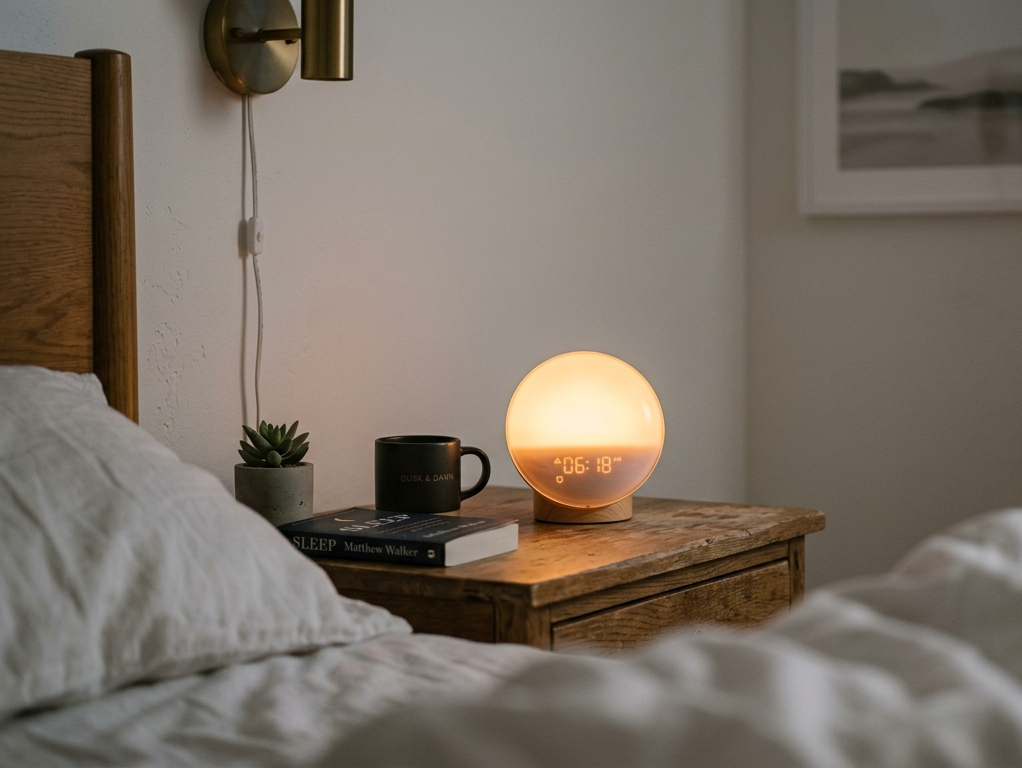
A wake-up light is, at heart, a lamp on a timer. The body of the lamp contains LEDs that gradually brighten over a chosen window — usually twenty to forty minutes — ending at the time you would like to be up. Many models start warm orange, then shift towards a cooler, brighter tone as the cycle progresses, imitating a slow sunrise.
According to Harvard researchers, light is one of the strongest cues our internal clock uses. When morning light arrives, it appears to support the body in shifting from rest mode into a wakeful state. A wake-up light tries to deliver that cue earlier and more predictably than a curtain that may or may not face the rising sun.
What it is not
A wake-up light is not a replacement for sleep, daylight or any kind of professional advice. It is a tool, and like any tool, it works best alongside other simple habits.
My personal setup
I keep my lamp about an arm’s length from the pillow, slightly above the headboard. I set the brightening curve to thirty minutes and choose the warmest target colour. The optional sound is a slow chime of birds that I turn down very low. The bedroom curtains are not blackout — they are linen, which lets a hint of true morning light join the lamp by the end of the cycle.
- Place the lamp slightly above eye level rather than at the foot of the bed. Indirect light reaches the closed eyelids more evenly.
- Keep the same wake-up time on most days. The lamp pairs well with consistency.
- Dim the evening. A bright bedroom at 23:00 will dilute the morning effect.
“The lamp does not wake me. It reminds my body that morning is coming.” — Elena, journal entry
What the research seems to suggest
Research indicates that gradual morning light may support a smoother shift out of sleep for many people, although results vary. As WHO specialists note, individual rhythms differ widely — some people respond strongly to light, others to temperature, others to sound. The wake-up light is one option in a small toolbox.
If you try one
Give it two full weeks. The first morning is usually unremarkable. Around day five, many people describe a softer feeling on waking. That feeling is the point.
Where it falls short
If your evenings are loud with screens and bright ceiling lights, the lamp may struggle to land. The morning signal works best when the evening signal has already begun winding down. The lamp will also not replace daylight: a short walk outside still seems to matter more than any device.
How I chose mine
There are many wake-up lights on the market and the prices vary widely. I did not buy the most expensive one. I looked for three features only: a curve longer than fifteen minutes, a target light that I could keep warm rather than blue, and a physical button I could press without my glasses. Everything else — apps, integrations, voice assistants — struck me as noise. A morning device should disappear into the bedroom, not invite my phone back into it.
I also paid attention to the bulb temperature. A lamp that ends in a cool blue tone may wake the body faster, but it can feel harsh after a calm evening. A warmer end tone — closer to candlelight than to office light — matched my preference for a softer start. Your preference might differ; that is part of the point.
One last small tip
If you share a bed with someone who wakes at a different time, point the lamp slightly away from the other pillow. The light is gentle, but it is still a signal, and a shared bedroom is a shared rhythm.
Author conclusion
A wake-up light is a small, kind, low-key piece of equipment. It will not transform a tired week, but it will probably make the morning landing softer. In my experience, that softness compounds. After a month, the alarm felt like a memory rather than a daily startle. If you are curious, start with a modest model, keep your evenings dim, and let the lamp do its quiet work for a couple of weeks before deciding.
Read also
Join the slow-morning letter
Soft notes about gentle wake-ups, calm playlists, and warm rituals. Delivered every other Sunday.